
How Often Reformer Pilates Works Best When You’re Building a Real Practice
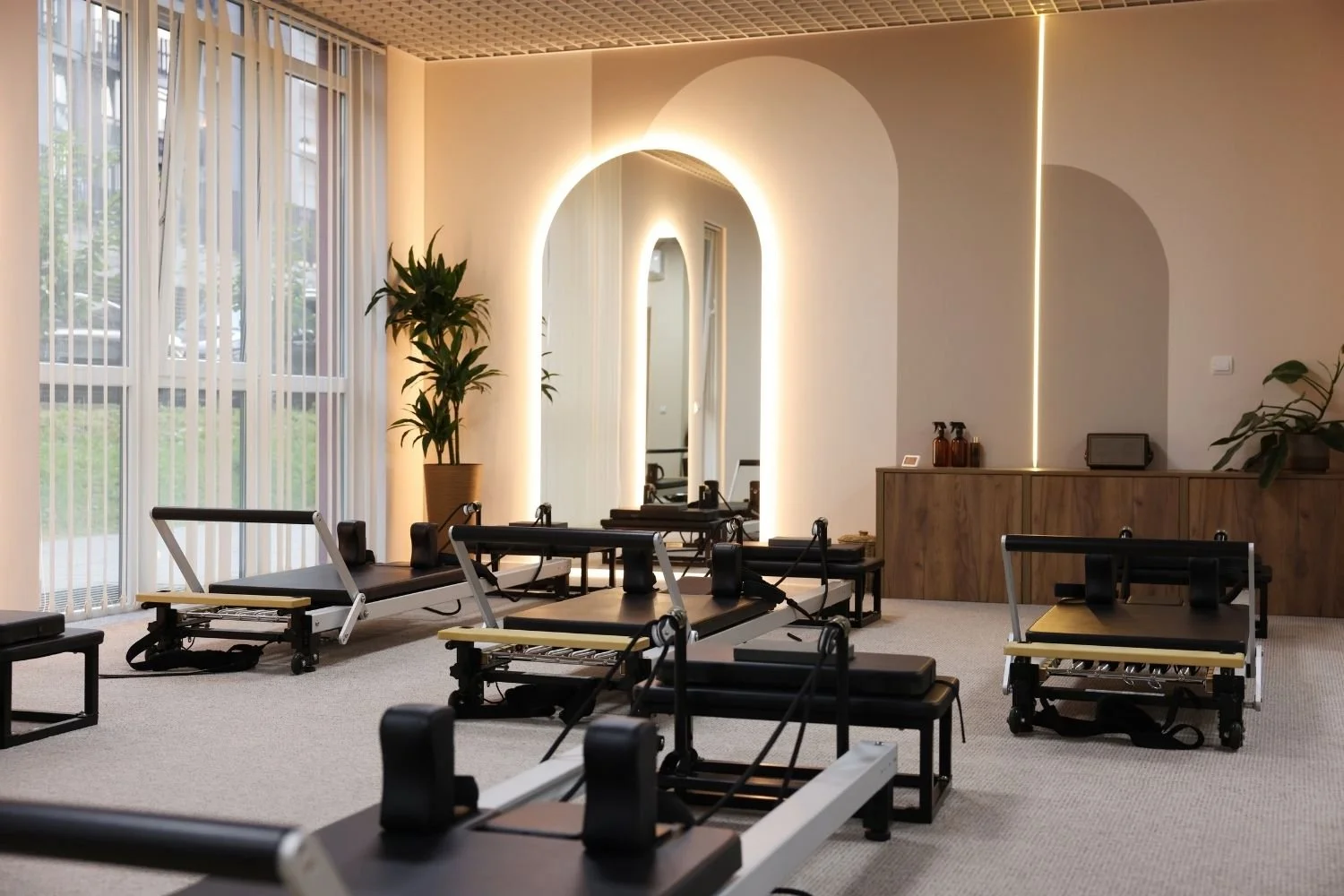
Most people walk into their first reformer class with the same quiet question in mind: how often do I actually need to come to make this work?
It's a fair thing to wonder. The reformer is unlike anything else. The carriage moves beneath you, the springs add a resistance that is both supportive and challenging, and every movement asks your body to slow down and pay attention. You leave feeling different. Taller, somehow. More settled.
But that feeling, as good as it is, only becomes lasting change when it's repeated. Frequency is the part most people underestimate, and it's exactly what this article is here to clarify.
How Often You Should Do Reformer Pilates
The honest answer is: it depends on where you are starting and what you want to feel.
If you are brand new to the reformer, your nervous system is absorbing a lot of new information at once. The body needs time between sessions to process the movements, adapt to the resistance, and build the neural pathways that make Pilates feel intuitive over time.
If you have been practicing for a while and your body has developed a base level of strength and coordination, you can train more frequently with confidence.
Reformer Pilates is classified as a form of resistance training. Like any resistance-based method, it works best when practiced two to three times per week, with rest days included to allow your muscles to recover and rebuild.
How Many Times a Week Reformer Pilates Works Best for Beginners
The first few weeks of reformer Pilates are a period of discovery. The reformer beginner schedule for most people starts conservatively, and that is intentional.
Starting With 1 to 2 Classes Per Week
For someone stepping onto the reformer for the first time, one to two sessions per week is a thoughtful starting point. This frequency gives your body the space it needs to adapt without overwhelming it.
Building Toward 2 to 3 Classes Per Week
After four to six weeks of consistent practice at one to two classes, most people naturally feel ready to increase. Your body has adjusted to the movements. You are no longer spending energy just figuring out what to do. Now the real work begins.
When You Are Ready to Practice 3 to 4 Times Per Week
For those who have built a consistent base and want to accelerate, three to four sessions per week is where transformation becomes more pronounced. Strength builds more quickly. The body composition shifts. The posture improvements you noticed become permanent rather than temporary.
Here is a simple reference for finding your starting point:
| Frequency | Experience Level | What to Expect |
|---|---|---|
| 1x per week | Complete beginner | Body awareness, gentle introduction |
| 2x per week | Beginner | Improved flexibility, early strength gains |
| 3x per week | Beginner to intermediate | Visible posture changes, toning begins |
| 4–5x per week | Intermediate to advanced | Accelerated results, full-body transformation |
Reformer Pilates Results Timeline
One of the most common questions people have about reformer Pilates is how long before results appear. The reformer Pilates results timeline is not as dramatic or as slow as people tend to expect.
Joseph Pilates himself famously said that in ten sessions you will feel the difference. In twenty, you will see it. In thirty, you will have a new body. That rhythm still holds true today.
Sessions 1 to 5: You are learning the language of your body on the reformer. Expect to feel increased body awareness and a deep sense of calm after each class.
Sessions 5 to 10: Flexibility begins to shift. Tight muscles release. Breathing becomes more expansive. Many people report less tension in the neck and lower back.
Sessions 10 to 20: Core strength becomes noticeable. Posture improves in everyday life, not just on the reformer. Clothes may fit differently. Movement feels more coordinated and effortless.
Sessions 20 and beyond: Toning becomes visible. Strength is consistent. The practice feels deeply integrated into how you carry yourself.
Consistency is the single most important factor in your results. A person who attends two classes per week without interruption will see more progress than someone who does five classes one week and none the next.
Creating a Consistent Reformer Pilates Schedule
A reformer Pilates consistency plan works best when it is built around your actual life, not an idealized version of it. The goal is to create a rhythm that is sustainable across months, not just weeks.
When building your schedule, consider the following:
Choose class times that match your natural energy. If you are someone who feels alert and grounded in the morning, morning classes will feel easier to commit to long-term.
Space your sessions evenly across the week. Two classes per week work well on alternating days. Three classes per week flow naturally with one rest day between each.
Treat your reformer sessions the way you would a commitment to someone else. Block them in your calendar and protect that time.
Start with a class pack so you have sessions already reserved. This removes the daily decision of whether or not to go.
What derails most people is not motivation but structure. When the next session is already booked and you know exactly when you are going, showing up becomes the path of least resistance.
Rest Days and Recovery for Reformer Pilates
Rest days for reformer Pilates are not passive. They are active components of your progress.
During rest, your muscles repair and strengthen. The movement patterns you practiced on the reformer consolidate in the nervous system. Recovery is when the work you did in class actually becomes part of your body.
For beginners, at least two to three rest days per week is appropriate. For those training three to four times per week, one to two rest days built into the week keeps the body responsive and injury-free.
Rest days do not have to mean complete stillness. A gentle walk, a stretch session, or time spent near the water can support recovery beautifully. What rest days do mean is that the reformer waits until your body is ready to receive the session fully.
Pushing through fatigue on the reformer is counterproductive. Pilates is a precision practice. When the body is tired, precision suffers, and so does the quality of the work. Rest is not weakness. It is wisdom.
Reformer Pilates vs Gym Frequency
A question that often comes up for people balancing multiple movement practices is how reformer Pilates compares to gym training in terms of how often you should do each.
| Aspect | Reformer Pilates | Traditional Gym Training |
|---|---|---|
| Nature of the Work | Uses spring-based resistance that works with the body’s natural movement patterns. | Often uses external loads like barbells, dumbbells, or machines to build strength and muscle through resistance and overload. |
| Muscle Impact | Lower impact on muscles and joints due to controlled, resistance-assisted movement. | Heavy lifting commonly creates micro-tears in muscle fibers as part of the muscle-building process. |
| Recovery Needs | Generally requires less recovery time because the load is lighter and movements are controlled. | Requires longer recovery windows due to higher intensity and muscle damage from heavy lifting. |
| Typical Weekly Frequency | Intermediate practitioners may train 3–5 times per week without issue. | Usually structured around split routines (e.g., push–pull–legs) with rest days between muscle groups. |
| Training Focus | Deep core stability, spinal mobility, postural alignment, and mind–body connection. | Strength, muscle hypertrophy, and performance using progressive overload. |
Choosing Reformer Pilates Classes in Griffintown
For those in Montreal, Griffintown has become a neighbourhood that carries its own quiet energy. The Lachine Canal runs nearby. The architecture is warm and industrial at once. And tucked into this neighbourhood is Marea, Montreal's first nail and Pilates salon.
Classes available at Marea include:
Intro Reformer: Your first step onto the machine, in a low-pressure and welcoming environment.
Morning Mobility: Gentle movement focused on flexibility and mind-body connection, open to all levels.
Full Body Beginner: Foundational sequences for those a few sessions in, building coordination and flow.
Core Burn Beginner: Slow, controlled activation of deep abdominals, pelvic floor, and lower back.
Abs and Glutes Intermediate: Targeted reformer work for those wanting focused sculpting results.
Sirens Sculpt: Marea's signature class. Ocean sounds. Oblique focus. A full sensory experience.
Full Body Intermediate and Advanced: Progressive sequences for those with a consistent practice base.
The studio is open Wednesday to Friday from noon to 8 PM, and on weekends from 11 AM to 7 PM. It is located at 1225 Rue Smith, in the heart of Griffintown.
Memberships and Class Packs for a Consistent Pilates Routine
One of the most effective ways to honour a reformer Pilates consistency plan is to invest in a structure that makes returning easy. Pilates membership Montreal and class packs are designed exactly for this.
Marea offers a range of pilates class packs Montreal clients can choose from based on where they are in their practice and how often they plan to come.
| Pack | Classes | Price | Valid For |
|---|---|---|---|
| Mancora | 5 classes | $170 | 2 months |
| Punta Sal | 10 classes | $320 | 4 months |
| Vichayito | 15 classes | $448 | 4 months |
For those who want to explore before committing, a single class is available for $35, and a first-time drop-in is offered at $25. This introductory rate gives new clients a full reformer class with one of Marea's instructors, in a space that feels calm from the moment you walk in.
Marea also offers an Unlimited Membership, an introductory offer that includes unlimited reformer Pilates classes and unlimited traditional manicures or pedicures with regular polish. The membership spans three months and is renewed manually, giving you full control over your commitment. Only one appointment per day is allowed, with a maximum duration of one hour.
The Practice Builds Itself
Knowing how often to do reformer Pilates is the first step. The second step is simply beginning.
Most people who start with one or two sessions a week find themselves naturally drawn to add more. The body begins to crave the work. The breath slows. The posture lifts. The muscles remember what they are capable of. Reformer Pilates has a way of becoming something you protect in your week rather than something you squeeze in.
At Marea, every session is designed to meet you exactly where you are. The reformer waits. The springs are set. The light in the studio is soft, and the energy is clear.
Your schedule is at mareastudio.ca. A first-time drop-in is $25. The rest follows naturally.