Inside the First Class Most Reformer Pilates Beginners Worry About
Your body is already curious. This is what it wants you to read first.
Most people spend weeks thinking about booking a reformer Pilates class before they actually do it. The machine looks unfamiliar. Classes on social media look polished and impossible. And there is always that quiet uncertainty of not knowing what to do with your body once you are actually on it.
That hesitation is normal, and it usually dissolves the moment you walk into a real class.
If you want to walk in feeling calm and prepared rather than wide-eyed and guessing, this is exactly what you need. A clear, honest look at what reformer Pilates for beginners actually involves, what to bring, what to expect, and how to find the right studio in Montreal.
What Reformer Pilates Is and Why Beginners Start With It
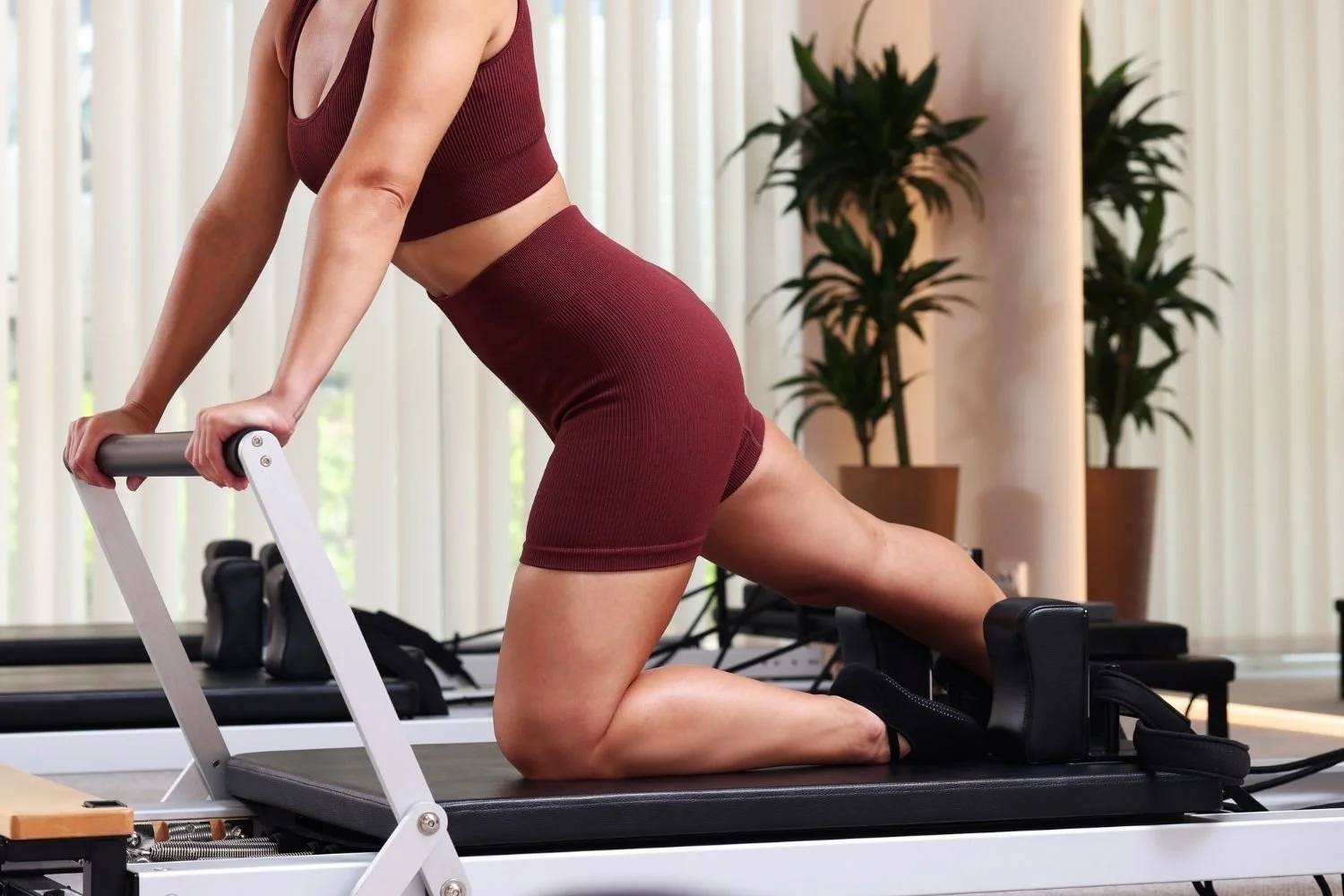
The reformer is a padded, horizontal carriage mounted inside a rectangular frame. Springs attach the carriage to the frame, and you move on it using a combination of pushing, pulling, and controlled resistance. The springs can be added or removed to make the work easier or harder depending on the exercise and the person.
What makes this machine so well suited for beginners is the built-in support it provides.
The springs assist your movement when needed and challenge it when appropriate.
Your instructor adjusts the setup to match your ability level before class begins.
Nothing is fixed. Nothing assumes you have done this before.
Reformer Pilates builds strength across the whole body with an emphasis on the deep stabilizing muscles that most conventional workouts skip entirely. The muscles along your spine, your inner core, your hip stabilizers. The work is low impact, which means your joints stay protected throughout every movement. Over time the results show up in better posture, stronger muscles, more ease in your body, and a kind of physical confidence that builds session by session.
For beginners specifically, the reformer offers something mat Pilates and most gym equipment cannot. It teaches your body how to move correctly before asking it to move hard. That foundation changes everything down the line.
Is Reformer Pilates Good for Beginners
The short answer: yes. Reformer Pilates for beginners is among the most accessible ways to start a movement practice, precisely because the machine meets you where you are rather than where you think you should be.
The resistance is adjustable.
The exercises can be modified in real time.
Your instructor watches your form and corrects it, which means you are not guessing your way through movements and building bad habits.
Every class is a guided experience, not a drop-in-and-figure-it-out situation.
People arrive at beginner reformer classes from all kinds of starting points.
Some are recovering from injury.
Some are completely new to structured movement.
Some are athletes cross-training or working on muscular imbalances.
The reformer works for all of them because the machine adapts, and because a skilled instructor reads the room.
The thing that makes reformer Pilates especially valuable at the start of a practice is the quality of attention it demands. Every movement asks for focus. You cannot zone out the way you might on a treadmill. That deliberate, mindful quality is exactly what makes it effective, and it is also what makes you feel so different after class.
What Happens in a Beginner Reformer Pilates Class
Knowing the structure of a class before you arrive removes almost all of the uncertainty. Here is what a typical session looks like from start to finish.
Warm Up and Core Activation
Class opens with breath work and gentle movement designed to bring your awareness into your body. You learn how to find a neutral spine, how to engage the deep abdominal muscles, and how the reformer carriage moves beneath you. This part feels slow, and it should. Your nervous system is learning new movement patterns, and that takes presence.
Guided Reformer Exercises
The main section of class moves through a full-body sequence. Legs, hips, core, back, arms, and shoulders all get attention. You work through positions lying on your back, lying face down, seated, kneeling, and standing on the carriage. Your instructor guides each movement with verbal cues and hands-on adjustments when needed.
Cool Down and Mobility Work
Class closes with stretching and mobility work, often using the reformer's spring tension for gentle traction and release. The hips open. The spine lengthens. Tension held in the shoulders softens. Most people leave feeling taller than when they walked in. That is not a metaphor. It actually happens.
Reformer Pilates vs Mat Pilates for Beginners
Both are rooted in the same principles of control, alignment, breath, and precision. The experience, however, is quite different.
| Aspect | Reformer Pilates | Mat Pilates |
|---|---|---|
| Equipment | Uses a reformer machine with a moving carriage and adjustable springs. | No equipment required; performed on a mat using body weight only. |
| Resistance | Springs provide adjustable resistance that can either support or intensify movements. | Resistance comes entirely from your own body weight and control. |
| Support for Beginners | The machine can assist movements you may not yet have the strength to perform independently, helping you learn proper form earlier. | No external support, so movements rely fully on your existing strength and coordination. |
| Learning Experience | Offers physical feedback from the machine, which can help beginners understand alignment and movement patterns more quickly. | Requires more internal body awareness since there is no mechanical guidance. |
| Difficulty for Beginners | Often feels more guided and supported in early sessions. | Can be surprisingly challenging because stabilizing muscles must work without assistance. |
| Overall Value | Excellent entry point for beginners who benefit from guided resistance and feedback. | Builds strong foundational control and coordination using only the body. |
Both approaches have real value, and most practitioners eventually work with both. For someone just starting out, the reformer is the more supported, more guided entry point.
What to Wear to a Reformer Pilates Class
What to wear to reformer Pilates is one of the most common questions before a first session. The answer is refreshingly simple.
Comfortable Activewear
Fitted, stretchy clothing is what works best. Leggings and a fitted top or sports bra are ideal. Avoid loose or baggy clothing because it can get caught in the reformer's springs and carriage during movement.
Grip Socks and Studio Essentials
Grip socks for reformer Pilates are mandatory. This is a hygiene and safety requirement at Marea, not a preference. The textured grip on the sole keeps your feet stable on the footbar and carriage, which is especially important during exercises that involve pushing or pressing with the feet.
First Class Tips Worth Actually Remembering
These reformer Pilates first class tips come from the things that make a real difference on day one.
Arrive ten minutes early. Getting settled before class starts, meeting your instructor, and letting them know it is your first time makes the whole session go better.
Mention any injuries or limitations before class begins. Lower back sensitivity, knee issues, shoulder restrictions.
Breathe through every movement. Holding your breath is the most common beginner habit, and it works against everything the method is trying to do.
Release the need to look like you already know what you are doing. Your instructor is not comparing you to anyone else.
Be on time. At Marea, clients who arrive more than 5 minutes late may not be permitted to join the session. This policy exists for the safety and flow of everyone in the class.
Expect to be sore in unexpected places. The inner thighs, the deep abdominals, the muscles along the lower spine.
Most importantly, go easy on yourself in the first few classes. Reformer Pilates is a practice. The first session is just the beginning of something that compounds beautifully over time.
How Often Beginners Should Do Reformer Pilates
How often should beginners do reformer Pilates?
Starting with one to two classes per week is the right pace for most people. This gives your body enough time to recover and absorb what it is learning between sessions without losing momentum.
After four to six weeks of consistent practice, most beginners feel ready to move to two or three sessions per week.
The most common beginner mistake is going hard in the first two weeks and then stopping entirely. Consistency over months matters far more than volume in the first few weeks. One class per week, sustained over three months, will change how your body feels and functions more meaningfully than five classes in a single week followed by nothing.
At Marea, the class packs are designed with this rhythm in mind. The Mancora pack offers 5 classes valid over 2 months, which fits a comfortable starting pace. The Punta Sal 10-class pack and the Vichayito 15-class pack both carry a 4-month validity, giving you room to build a genuine habit without pressure.
How to Book Your First Reformer Pilates Class in Griffintown
Booking your first class takes a few minutes.
Visit this to see the full schedule and reserve your spot. Payment is processed at the time of booking, so everything is settled before you arrive.
To book by phone, the team at Marea is reachable at (438) 375-3929. The studio is located at 1225 Rue Smith, Montreal, H3C 1X2. Questions can also go to studiomarea.op@gmail.com.
For your first visit, Marea offers a First-Time Drop-In at $25. That gets you a full reformer class led by one of the studio's instructors, with all the guidance a first session deserves. It is the easiest, lowest-pressure way to experience the reformer before committing to a pack.
If you book through ClassPass and run into a reservation issue, reach out to ClassPass support directly. Those bookings are managed on their end.
One policy worth knowing before you cancel: cancelling a class results in the loss of that session. No credits, no refunds. Plan to show up. That commitment is part of building the practice.
The Only Thing Left to Do Is Book It
Reformer Pilates for beginners has a way of surprising people. The first class feels unfamiliar. By the third or fourth, your body starts to understand the language. By the tenth, you notice it in everyday life. The way you stand. The way you carry yourself. A quieter, more settled strength that was not there before.
None of that comes from reading about it. It comes from showing up once, and then again.
The schedule is at https://www.mareastudio.ca/appointmentsmarea. The first-time class is $25. If reformer Pilates in Montreal has been on your mind, this is the moment to stop thinking and start moving.